451
HT: Christian History Institute
On October 8, 451, the largest of all church councils assembled at Chalcedon, near Constantinople (modern Istanbul). Between five and six hundred bishops were present representing conflicting views about the two natures of Christ.
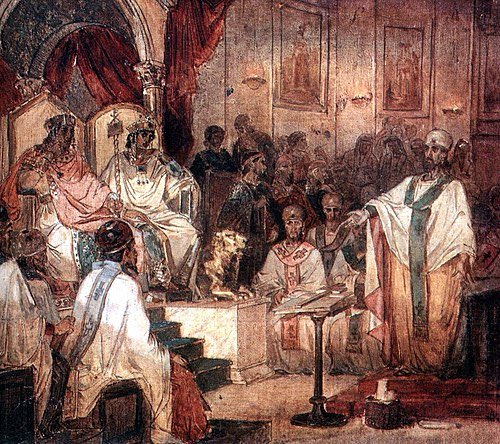
After much discussion, at the fifth and most important session, on this day, 22 October 451, the council adopted a creed that gave expression to a new consensus acceptable to most of the church. The human and divine natures of Christ, said the council, existed in one person without his becoming less divine or less human. The work Christ did was the work of his whole person. A few eastern Christians and Copts rejected the teaching of the council. However, Catholics, Eastern Orthodox, and most Protestants believe that the council’s statement accurately reflects what the Bible teaches about Jesus.
“Following, then, the holy Fathers, we all unanimously teach that our Lord Jesus Christ is to us One and the same Son, the Self-same Perfect in Godhead, the Self-same Perfect in Manhood ; truly God and truly Man; the Self-same of a rational soul and body ; co- essential with the Father according to the Godhead, the Self-same co-essential with us according to the Manhood like us in all things, sin apart; before the ages begotten of the Father as to the Godhead, but in the last days, the Self-same, for us and for our salvation (born) of Mary the Virgin Theotokos as to the Manhood; One and the Same Christ, Son, Lord, Only-begotten; acknowledged in Two Natures unconfusedly, unchangeably, indivisibly, inseparably ; the difference of the Natures being in no way removed because of the Union, but rather the properties of each Nature being preserved, and (both) concurring into One Person and One Hypostasis; not as though He were parted or divided into Two Persons, but One and the Self-same Son and Only-begotten God, Word, Lord, Jesus Christ; even as from the beginning the prophets have taught concerning Him, and as the Lord Jesus Christ Himself hath taught us, and as the Symbol of the Fathers hath handed down to us.”
1602
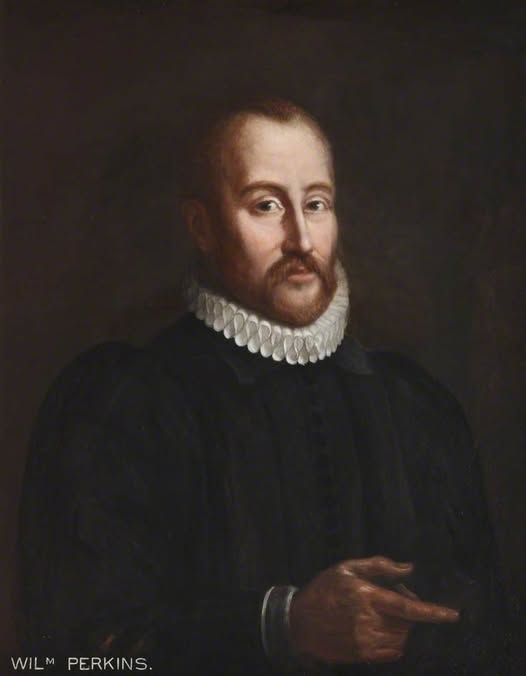
𝐖𝐢𝐥𝐥𝐢𝐚𝐦 𝐏𝐞𝐫𝐤𝐢𝐧𝐬 died on this day in history, 𝐎𝐜𝐭𝐨𝐛𝐞𝐫 𝟐𝟐, 𝟏𝟔𝟎𝟐, at the age of 44 from complications arising from kidney stones. ‘Moses my servant is dead’ (Joshua 1:2) was the text for the funeral sermon preached for him by James Montagu.
“For in the day of birth men are born and brought forth into the vale of misery, but afterwards, when they go hence, having death altered unto them by the death of Christ, they enter into eternal joy and happiness with all the saints of God forever.”
𝐖𝐢𝐥𝐥𝐢𝐚𝐦 𝐏𝐞𝐫𝐤𝐢𝐧𝐬, 𝐴 𝑆𝑎𝑙𝑣𝑒 𝐹𝑜𝑟 𝑎 𝑆𝑖𝑐𝑘 𝑀𝑎𝑛; 𝑜𝑟, 𝑎 𝑇𝑟𝑒𝑎𝑡𝑖𝑠𝑒 𝐶𝑜𝑛𝑡𝑎𝑖𝑛𝑖𝑛𝑔 𝑡ℎ𝑒 𝑁𝑎𝑡𝑢𝑟𝑒, 𝐷𝑖𝑓𝑓𝑒𝑟𝑒𝑛𝑐𝑒𝑠, 𝑎𝑛𝑑 𝐾𝑖𝑛𝑑𝑠 𝑜𝑓 𝐷𝑒𝑎𝑡ℎ, 𝑎𝑠 𝑎𝑙𝑠𝑜 𝑡ℎ𝑒 𝑅𝑖𝑔ℎ𝑡 𝑀𝑎𝑛𝑛𝑒𝑟 𝑜𝑓 𝐷𝑦𝑖𝑛𝑔 𝑊𝑒𝑙𝑙, in 𝑇ℎ𝑒 𝑊𝑜𝑟𝑘𝑠 𝑜𝑓 𝑊𝑖𝑙𝑙𝑖𝑎𝑚 𝑃𝑒𝑟𝑘𝑖𝑛𝑠, Vol. 10, p. 408
1903
This day marks the death of Susannah Spurgeon, wife of English Baptist preacher Charles Haddon Spurgeon. Their marriage lasted thirty-six years, and she faithfully supported his ministry despite long periods of illness.
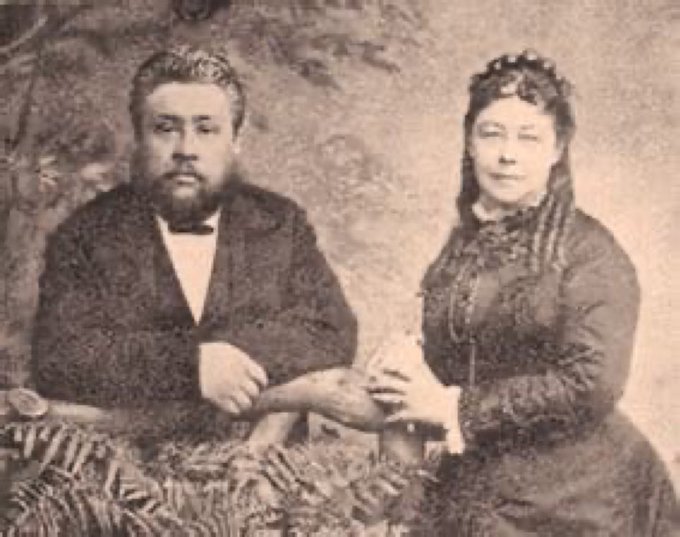
After his death, she established the “Book Fund,” through which she provided more than 200,000 theological books to poor pastors across Britain and abroad.