1528
EDUCATED AT OXFORD AND CAMBRIDGE, William Tyndale became a tutor for the children of Sir John Walsh at little Sudbury Manor. Walsh often entertained the local clergy at his table. Sitting with them, the scholarly Tyndale was appalled at the lack of knowledge the clergy had of the Scriptures. In one heated exchange with a clergyman, he exclaimed, “If God spare my life, ere many years pass, I will cause a boy that driveth the plough shall know more of the Scriptures than thou dost.”
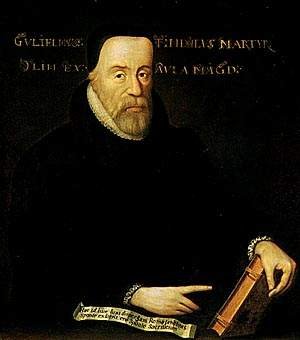
Tyndale requested authorization to translate and print the Bible in English. When this was denied him, he left England as a fugitive in 1524 and made the translation on the European mainland. Soon he issued the New Testament, but it was banned and burned by English bishops. England’s religious and political leaders launched a propaganda war against him. Tyndale replied by publishing pamphlets.
King Henry VIII asked Sir Thomas More to refute Tyndale. More accused Tyndale of preaching sedition (treason against the king). On this day, 2 October 1528, Tyndale responded with The Obedience of a Christian Man, a pamphlet arguing that a good Christian obeys the king in so far as the king obeys God. He supported his points from the Bible, declared that Scripture is the Christian’s final authority in matters of faith, and attacked teachings such as salvation by works.
In response to objections to translating the Bible into English, Tyndale answered, “They say our tongue is too rude. It is not so. Greek and Hebrew go more easily into English than into Latin. Has not God made the English tongue as well as others? They [allow] you to read in English of Robin Hood, Bevis of Hampton, Hercules, Troilus, and a thousand ribald or filthy tales. It is only the Scripture that is forbidden. It is therefore clearer than the sun that this forbiddal [forbidding] is not for love of your souls, which they care for as the fox doth for the geese.”
Although it had to be smuggled into England, Tyndale’s New Testament was a bestseller. The king’s agents searched Europe for him, forcing Tyndale to stay on the move. Finally, he settled with some friendly merchants in Antwerp, Germany where he continued translating. He had completed about two thirds of the Old Testament before he was betrayed into the hands of Belgian Catholics who strangled and burned him in 1536. His last prayer was “Lord, open the King of England’s eyes.” Just three years later, in 1539, Tyndale’s prayer was partially answered when Henry VIII required every parish church in England to provide a copy of the Bible in English. The translation selected was largely based on the work of William Tyndale.
1532
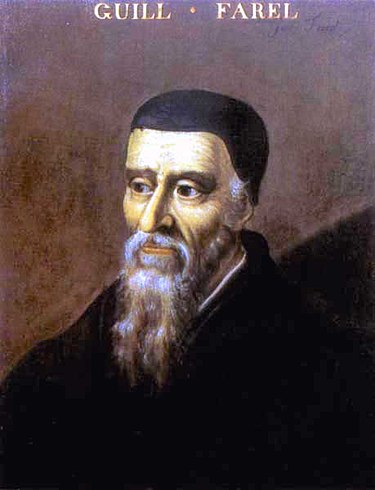
Reformer William Farel arrives in Geneva where in sixteen months his preaching will convince the city to join the Reformation.
1770
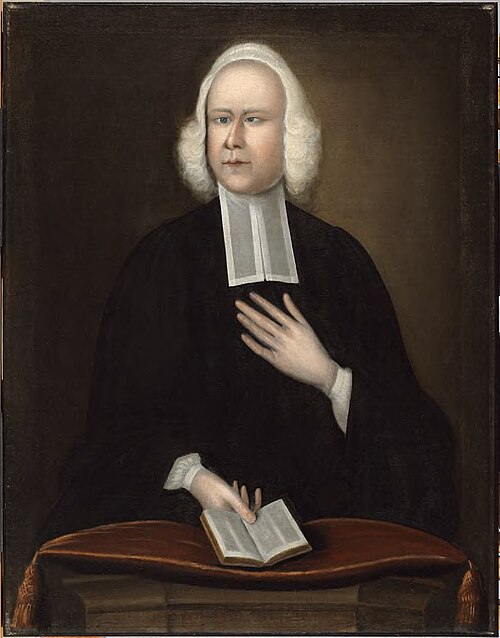
The funeral of George Whitefield is held at the Old South First Presbyterian Church in Newburyport. Thousands of people are unable to get even to the door of the church.
1792
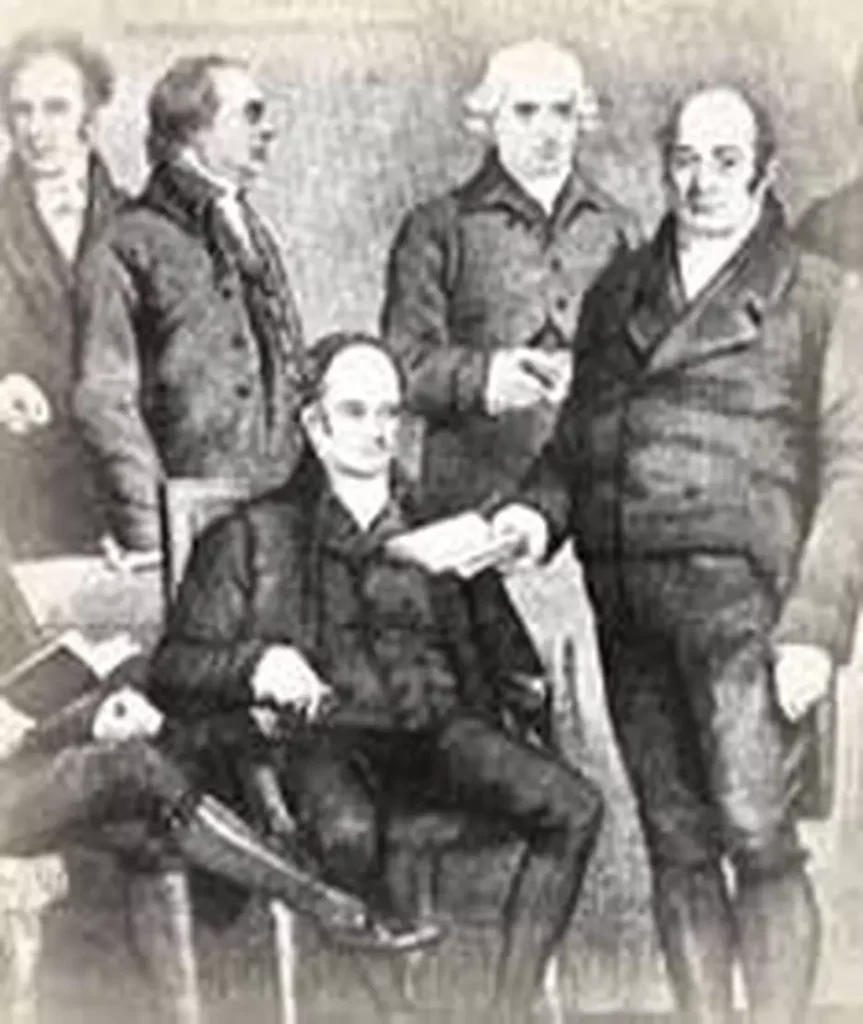
The gathering of young men who met in Mrs. Beeby Wallis’ parlor on this day, October 2, 1792 was not a likely group to begin major world-wide missionary work. The twelve ministers were all from small churches in the district of Kettering, England. Two had churches with congregations of less than 25 each. But they had become increasingly convinced that their churches should send the gospel message to the far-flung corners of the globe. Surprisingly, many Christians in the eighteenth century accepted the argument that the heathen had rejected the gospel and would be held accountable for their rejection on the coming day of judgment. Some even argued that if God wanted the heathen saved, he would enlighten them without any human help.
The young pastor William Carey couldn’t accept such views. He said the Apostles were commanded to teach all nations; and since the promise of the gospel was still true, surely the command to teach the nations was still true as well. Carey set down on paper his thoughts on the state of the world in his day, the need for missions, and the methods which should be used in carrying out the task. In May 1792 he published these as An Enquiry into the Obligation of Christians to use Means for the Conversion of the Heathens.
Point by point Carey answered objections which had been put forward against missionary activity. Were heathen lands too distant? Navigation had improved greatly in the last centuries. Were the heathen ways barbarous? Merchants and traders didn’t seem to mind the inconvenience of dealing with them. Was there physical danger to missionary activity or difficulties in procuring supplies or language barriers? If these all could be overcome in the interest of commerce and profit, surely they could be overcome for the Kingdom of Christ. Carey encouraged his readers to “Expect great things from God; Attempt great things for God.”
Carey’s pamphlet and impassioned address on missions at the semi-annual minister’s meeting at Kettering stirred the young men to action. When they met on October 2 in Mrs. Wallis’ parlor, they formed the Baptist Missionary Society for spreading the gospel among the heathen. Andrew Fuller was appointed Secretary, and a small snuff box with a picture of St. Paul’s conversion on the lid became the treasury. Each minister wrote down what he thought he could give, and £13 20s 6d was promised. It was very little for such a grand purpose, but hadn’t the Lord done much with a boy’s five loaves and two fishes?
The next year the society sent out William Carey to India. Carey translated the New Testament into Bengali; his influence alone extended throughout much of the East, to Burma, the East Indies, and China.
The Baptist Missionary Society was the first foreign missionary society created by the Evangelical Revival of the last half of the eighteenth century. In short order other missionary societies were established, and a new era in missions began as the faith was increasingly spread outside of the West, to the regions of Africa and Asia.
The work which began in Mrs. Wallis’ parlor continues today. Two hundred years later the Baptist Missionary Society still works in India in cooperation with the native church. There are 33 mission stations in the Indian sub-continent under its auspices with numerous churches, schools, hospitals, clinics, and agricultural programs. In 1981 the society had a total of 191 foreign missionaries throughout Asia and Africa. Carey was right–“Expect great things from God; Attempt great things for God.”