1649
When Thomas Shepard was 44 years old, he contracted a sore throat. The outstanding Puritan preacher never recovered. On this day, August 25, 1649, his short, hard life drew to a close.
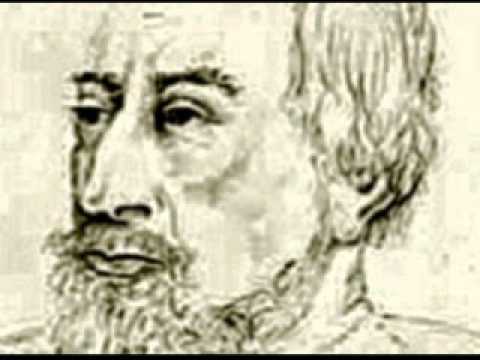
Born on the day that the gunpowder plot was discovered, at the very hour in which Parliament was to have been blown up, Thomas lost his mother when he was just four. A godly woman, she had loved young Thomas and prayed earnestly for him. His stepmother disliked him and often incited his father to punish him, although Thomas admitted he may have deserved it. Thomas remembered his father, a grocer, as, on the whole, a wise and godly man, but he died when Thomas was just ten.
Thomas was thrown onto grandparents who neglected him. Meanwhile he was treated with such brutality by his schoolmaster that he hated school. When the cruel teacher died and a kinder man took his place. Thomas discovered he liked to learn after all and determined to become a scholar. An older brother provided him with a loving home, and the young man knew a measure of happiness, “for him God made to be both father and mother unto me.”
He was not happy, however, even when he entered Cambridge University at the age of fifteen. He was living a life of reckless sin. Although he hungered for God, he hungered more for the things that fed his lust and pride; and he gambled, bowled and drank. After getting drunk one night he fled to a field and prayed. At the moment when he was worst, Christ was best to him, and Thomas “saw” the Lord’s sorrow for his sin. He vowed to spend part of each day in meditation. Resolutions did not change his heart. In fact, his character did not change until he heard a Puritan preach on Paul’s words “Be renewed in your mind.” (Romans 12.)
With the beginnings of a change of heart, Thomas still did not have peace. He experienced so much doubt that he contemplated suicide. But he emerged victorious, determined to become a preacher. And an effective preacher he was. He showed the people their misery and Christ as the remedy, and explained the way to seize Christ’s mercy. Archbishop Laud, who viewed the Puritans as a threat to national unity, summoned Thomas. With mocking words, he ordered the young man to stop preaching.
Thomas became chaplain in a private home and married. Intolerant religious authorities drove him from his position. His first son died. He and his wife embarked for New England. In cruel winter weather they barely escaped shipwreck. His wife contracted tuberculosis and soon went to the grave. Their remaining son was sickly. When Thomas remarried, his second wife also died after a few years, leaving him with deep grief. Two of their three children died young; and the third lived only into his twenties. Thomas saw these afflictions as God’s loving hand on him.
In the colonies, Thomas became a major figure. He was a leader in the trial and banishment of Ann Hutchinson. Her idea that every individual could receive messages from the Holy Spirit seemed to him to threaten the good order of the community.
Although he led more individuals to Christ than any other Puritan minister, he always felt dissatisfied with his efforts. He poured his energy into establishing an Indian mission, writing religious books, and founding Harvard University. When he died on this day, contemporaries knew that a great man had passed from their midst.
1732

In 1731 Count Zinzendorf returned to Herrnhut from Copenhagen with an appeal that would change the face of Protestantism. He had met two Eskimos from Egede’s Greenland mission. It looked as if the Greenland mission was about to fail. Shouldn’t Herrnhut send someone to take Egede’s place? The Moravians agreed. In a meeting held August 21, 1732, Christian David, a carpenter, and some other laymen were designated to go. They arrived in Greenland in May of 1733.
In Copenhagen, the count had also met a former slave, Anthony Ulrich, of St. Thomas Island. Anthony described the terrible brutality of slavery on the island. Slaves were utterly without Christ and were whipped if they came near a church. This account, relayed through Zinzendorf to the brethren at Herrnhut, greatly shocked them. Two close friends, Dober and Leupold were unable to sleep because of it. Surely Christ would want them to go to St. Thomas, even if they had to become slaves themselves in order to witness to the Negroes.
They asked permission to go, but it was refused. Everyone in the community saw only obstacles. The young men persisted and finally asked that the lot be drawn to determine if the Lord would allow them to go. Dober was selected, Leupold not. David Nitschmann, a man of experience and honor, offered to accompany Dober for a few months and help him get established in the islands.
The community of Herrnhut blessed the two men and sent them to Copenhagen to find a ship for St. Thomas. Many brethren were still opposed to the experiment, but Dober was determined to lay his life down if need be to bring the gospel to the slaves. Zinzendorf rode part way with them–to Bautzen, Germany–giving his final blessing on this day, August 25, 1732.
On the 300 mile trip to Copenhagen, Dober and Nitschmann met much skepticism. Virtually everyone told them it was folly to go to St. Thomas. To preach to slaves was absurd. Fever would kill the missionaries. Even Anthony changed his mind but did write them a letter of introduction to his sister.
In Copenhagen, help came from an unexpected quarter. Princess Charlotte Amelia learned of the mission and was moved to give funds and a Bible. A Dutch ship was found to take them and the two sailed in October. During the voyage the sailors continually scoffed at the mission which they said must undoubtedly fail. They tried to frighten the Moravians with stories of plague.
After much labor and years of fruitless suffering, Dober won his first convert–a boy. Anthony’s sister was also brought to Christ. The Moravians later extended their mission work to the whole world.
1895
Andrew Murray was a man of such deep spiritual strength that people wanted to know his secret. How had God worked in his personal life? Although Andrew wrote books explaining how we need to live in Jesus, he refused to tell anyone about his own spiritual life. The famous Scottish preacher Alexander Whyte asked him for this information. Andrew’s daughter pleaded. Others asked, too. But Andrew always shook his head “no.” Jesus Christ should be exalted, not Andrew Murray.
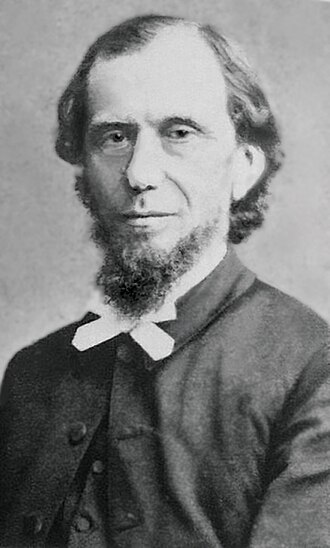
But at a Keswick conference (Keswick was founded to encourage deeper spiritual life) so many people urged and pleaded that Andrew finally gave in and wrote a short testimony. It appeared in The Christian magazine on this day, August 25, 1895.
Andrew explained that as a young pastor he had been full of zeal and worked hard. He knew he was born again, but he felt that he was lacking power in his ministry. He longed for something better. An older missionary encouraged him with the words, “If God puts a desire in your heart he will fulfill it.”
For years more, Andrew struggled. Looking back, he could say that he thought God was putting more and more of his Holy Spirit in him, but he did not see it at the time. Even when he wrote his book Abide in Me, he knew it was true, but had not experienced all that he wrote about. Yet, ten years after he began to really seek to be filled with Holy Spirit power, he could say that he had learned to abide in God’s presence continually.
Why did he fail for many years? Why do we fail when we seek to live close to Christ?
“I will tell you where you probably fail,” he wrote. “You have never yet heartily believed that He [God] is working out your salvation. Of course you believe that if a painter undertakes a picture, he must look to every shade and color and every touch upon the canvas…But you do not believe that the everlasting God is in the process of working out the image of His Son in you. As any sister here is doing a piece of ornamental or fancy work, following out the pattern in every detail, let her just think: ‘Can God not work out in me the purpose of His love?’ If that piece of work is to be perfect, every stitch must be in its place. So remember that not one minute of your life should be without God. We often want God to come in at a certain time, say in the morning. Then we are content to live two or three hours on our own, and then he can come in again. No! God must be every moment the worker in your soul.”
“May he teach us our own nothingness and transform us into the image of His Son and help us to go out to be a blessing to our fellow men. Let us trust Him and praise Him in the midst of a consciousness of failure and of a remaining tendency to sin. Notwithstanding this, let us believe that our God loves to dwell in us, and let us hope without ceasing in His still more abundant grace.”