1744
Rowland Hill scandalized his contemporaries. The son of Sir Rowland Hill, a baronet, he was born in Shropshire, England on this day, August 23, 1744. Educated at some of England’s best schools on his way to becoming a minister (Shrewsbury, Eton and St. John’s College, Cambridge), he might have risen to elite positions in the church. Instead, he chose a lowly path.
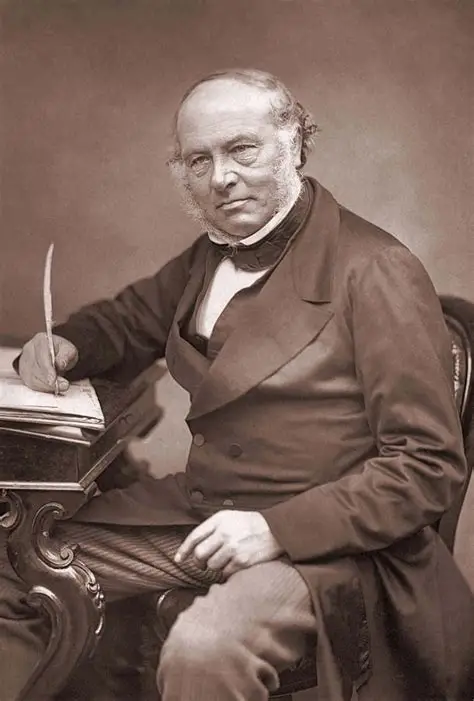
With the example of George Whitefield before his eyes, Rowland decided to carry the Gospel where it was most needed. Even while at school, he preached out of doors and visited the sick. Although he was appointed to a parish in Kingston, Somersetshire, he was denied admission to the Church of England priesthood because friends and religious authorities detested his methods. However, despite opposition and a strong Methodist influence, Rowland always followed Church of England forms and stayed in that denomination.
Rowland had a powerful voice and he knew how to express his ideas in such a way as to reach common people. He drew large crowds. His book Village Dialogues suggests the kind of illustrations and sayings that made him a delight to listen to. For example, “I would give nothing for that man’s religion whose very dog and cat are not the better for it.” It was Rowland who asked, “Why should the devil have all the good tunes?”–a saying often attributed to Martin Luther. The poet and scholar Robert Southey said that he was as good a performer, in his own realm, as certain famous actors were in theirs.
In Village Dialogues, Rowland named his Christian character Thomas Newman, for, as he said, “…everyman who goes to heaven must have the name of new-man. We must not expect to enter there unless we are created anew in Christ Jesus unto good works, which God hath before ordained that we should walk in them.”
Having inherited a good deal of money, Rowland used it to build Surry Chapel, London, where he preached and continued his leading-edge efforts at outreach. Thirteen Sunday schools were connected to his church. Despite his fixed place of work, he continued to make tours through England and to preach out of doors. In addition to this work, Rowland was a leader in forming the British and Foreign Bible Society, the London Missionary Society and the Religious Tract Society.
He died in 1833.
1952
“Both the authenticity and the general integrity of the books of the New Testament may be regarded as finally established.”
Frederick George Kenyon was in an authoritative position to write those words. After graduating from Oxford University (where he also tutored), he went to work for the British Museum in 1889. Nine years later he had become assistant keeper of manuscripts. By 1909 he was its director and head librarian. A renowned scholar of ancient languages, he also took a deep interest in the Bible.
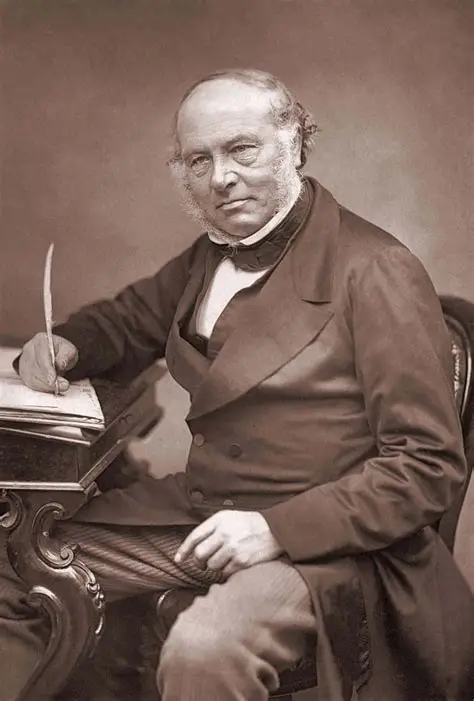
His position offered him many opportunities to study ancient papyri in the Greek language. Papyri are documents written on Egyptian reed “paper.” He showed that there are parallels between things written in the Greek documents and the text of the Bible.
Scholars as great as Frederick often write in such a way that few people can follow what they say. But Frederick had a gift for making his words understandable to ordinary people. He wrote books such as Our Bible and the Ancient Manuscripts. He was convinced that science does not disprove the Bible, but rather supports it.
Writing about the Bible, he showed that our documentary evidence for it is very good compared to the documentary evidence for other events in ancient history. For instance, here is what he has to say about Sophocles: “We believe that we have in all essentials an accurate text of the seven extant plays [plays for which we still have copies] of Sophocles; yet the earliest substantial manuscript upon which it is based was written more than 1,400 years after the poet’s death.” By comparison, the oldest manuscripts of the New Testament date to less than 100 years after the death and resurrection of Jesus and almost every verse of the New Testament had been quoted in a writing by someone somewhere by the third century.
“The number of manuscripts of the New Testament, or early translations from it in the oldest writers of the Church, is so large that it is practically certain that the true reading of every doubtful passage is preserved in some one or other of these ancient authorities. This can be said of no other ancient book in the world.”
Frederick concluded from his researches that, “The Christian can take the whole Bible in his hand and say without fear or hesitation that he holds in it the true Word of God, handed down without essential loss from generation to generation, throughout the centuries.”
In 1920, Sir Frederick became president of the British School of Archaeology in Jerusalem. He had been knighted in 1912. Between 1933 and 1936, Frederick published the famous Chester Beatty papyri in five volumes. The British museum had acquired these. They dated from about 200 AD and included most of the Epistles of Paul.
Frederick was not only interested in the Bible, but in the era of Aristotle and the poetry of Robert Browning. The great scholar died on this day, August 23, 1952. He was 89 years old, but had lived long enough to learn of the discovery of the Dead Sea Scrolls.
His daughter Kathleen also became an archaeologist and began excavating Jericho the year her father died. She came to conclusions that differed from her dad’s. Today, Frederick’s conclusions are seldom mentioned outside Christian circles.