306
Did a divine intervention occur on this day, 2 April, 306? Eusebius Pamphilius, the most notable of the early church historians, thought so. He was an eyewitness.
Four Caesars shared rule of the Roman Empire. Beginning in 303, they issued edicts that Christians be required to make idol sacrifices and offer libations. In Caesarea this resulted in the incarceration of many Christians who refused obedience. Tribunes and centurions summoned citizens by name to sacrifice. Those who refused were imprisoned and tortured. When the prison overflowed, graffiti shows that prisoners were held in a large underground cistern.
Eusebius himself eventually fled to Egypt to escape persecution but not before witnessing the heroic end of one of his pupils. This was a young man named Apphianus. Not yet twenty, the youth had lived a blameless life among depraved surroundings in the “college town” of Berytus. Despised by his wealthy parents for his conversion to Christianity, he came to Caesarea to study at Eusebius’s school.
One day, seeing governor Urbanus about to sacrifice to idols, Apphianus eluded the ruler’s guards, rushed up to the governor, grabbed his hand, and pleaded with him to cease his idolatry. The furious governor had him beaten and torn on the spot. When Apphianus held to his faith, the governor threw him into “a deep dark prison,” apparently the cistern.
The next day Apphianus underwent tortures again, including having his feet burned to the bone. On the third day, finding Apphianus still firm, the soldiers pitched him alive into the sea. But, wrote Eusebius:
As soon as they had cast this truly sacred and thrice-blessed youth into the fathomless depths of the sea, an uncommon commotion and disturbance agitated the sea and all the shore about it, so that the land and the entire city were shaken by it. And at the same time with this wonderful and sudden perturbation, the sea threw out before the gates of the city the body of the divine martyr, as if unable to endure it.
Archaeology suggests Caesarea had four entrances. One of these four gates, at the lower end of the city, opened onto the sea. That seems to be where Apphianus’s body was cast up. As of 2002, excavations of Caesarea had not identified earthquake damage in the relevant time frame to explain the city shaking, but much excavation remained to be done.
1739
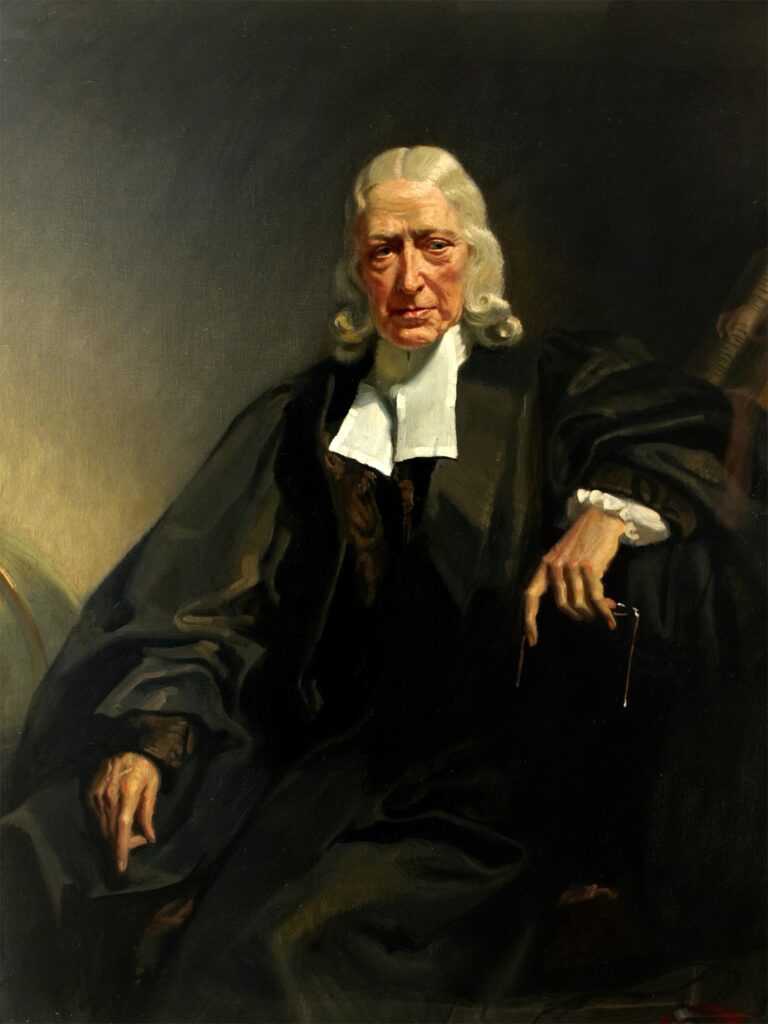
At Kingswood, England, Wesley first preaches in the open air to miners, a decisive step that frees him from dependence upon the favor of Church of England clergy for access to pulpits, but which requires him to swallow his pride.