1680
When Thomas Goodwin was born in 1600, he was a premature baby. Consequently, his health was a rather shaky. But since his godly parents hoped to see him in the pulpit, rather than farming or soldiering, bodily weakness was not a serious impediment to his future. The couple provided their son with the best education they could afford, and it paid off. At thirteen he went to Christ’s College, Cambridge University, where he did very well in his studies. Proud of his abilities, his whole thought was how he might turn them to personal advantage. He seemed destined to become another professional clergyman of the type that is scholastically brilliant but spiritually arid.
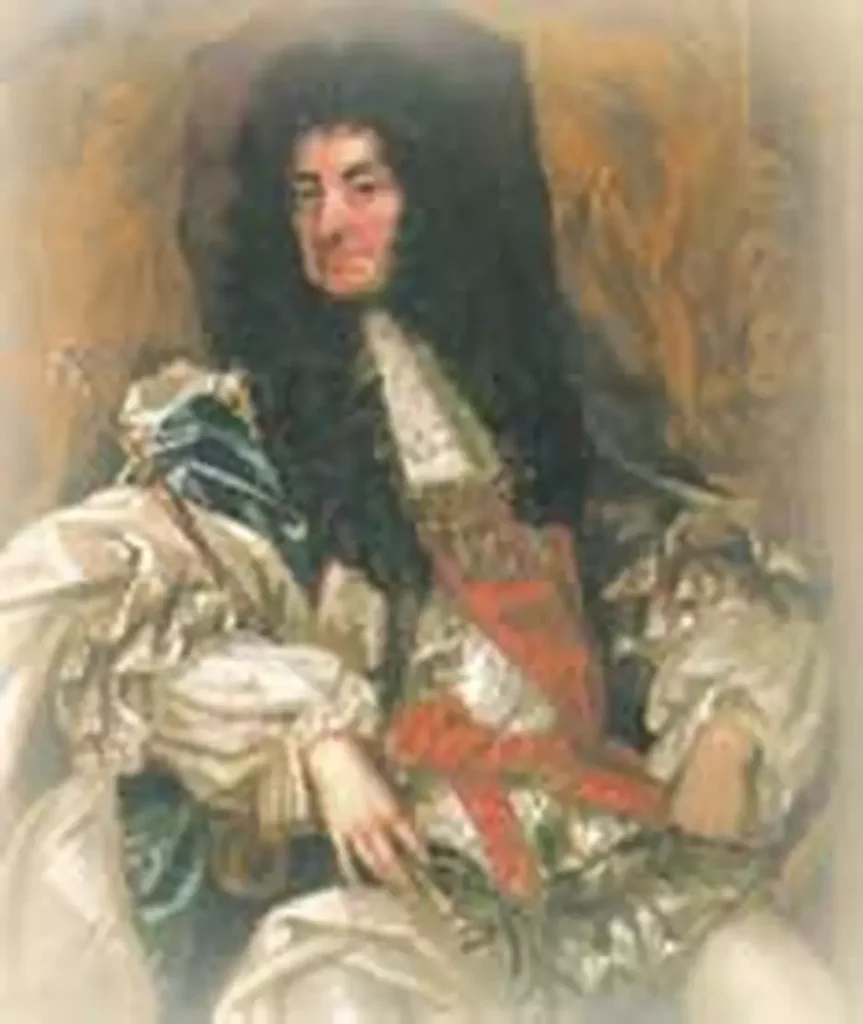
Instead, he became a Puritan great, a man who influenced his own generation through his preaching; and future generations through his printed works. Alexander Whyte, a famed Scottish preacher, tells what his discovery of Goodwin meant: “In those far-off years I read my Goodwin every Sabbath morning and every Sabbath night. Goodwin was my every Sabbath-day meat and my every Sabbath-day drink. And during my succeeding years as a student, and as a young minister, I carried about a volume of Goodwin wherever I went. I read him in railway carriages and on steamboats. I read him at home and abroad. I read him on my holidays among the Scottish Grampians and among the Swiss Alps. I carried his volumes about with me till they fell out of their original cloth binding, and till I got my bookbinder to put them into his best morocco. I have read no other author so much and so often. And I continue to read him till this day as if I had never read him before.”
How did such a transformation come about? For some time Goodwin avoided serious sermons. They made him uneasy. A frivolous companion, hearing a bell toll for a funeral, suggested they attend the service. Goodwin was reluctant, but went. The preacher, Dr. Thomas Bainbridge spoke of Christ weeping over unrepentant Jerusalem. Bainbridge reminded his listeners that “today is the day of salvation.” If we put off repentance, we never know that we will have another opportunity.
“I was so far affected,” wrote Goodwin, “that I said to a companion of mine who came to church with me, and indeed had brought me to that sermon, ‘That I hope to be the better for this sermon as long as I live’.” He fell under deep conviction of sin and confessed his wickedness to Christ, but was unable to find assurance of salvation until he realized that he must not trust his salvation to improvements in himself, but rather fix his eyes on Jesus.
He became a notable pastor. Favoring a congregational approach to church organization, he resigned a high position at Cambridge. For some years, he lived in exile in Holland to escape persecution by William Laud. When Charles I was driven from the throne, Goodwin preached to Parliament. After the restoration, he was expelled from the presidency of Magdalen College, Oxford by a hostile monarchy.
Goodwin died on this day, February 22, 1680. His last words were: “Ah, is this dying? How I have dreaded as an enemy this smiling friend.”
1954
For two years, Billy Graham planned a Greater London Crusade to kick off March 1st, 1954. This crusade was the greatest test of his ministry up to that point. The British were suspicious of the Yank and his “hot gospel.” An Anglican Bishop predicted Billy would return to America with his tail between his legs. Even backers were uneasy. Nothing could shake spiritually-dull England, they thought. Hold the Crusade in outlying regions first, they urged, and test the waters. Graham refused. God did not need a pilot program.
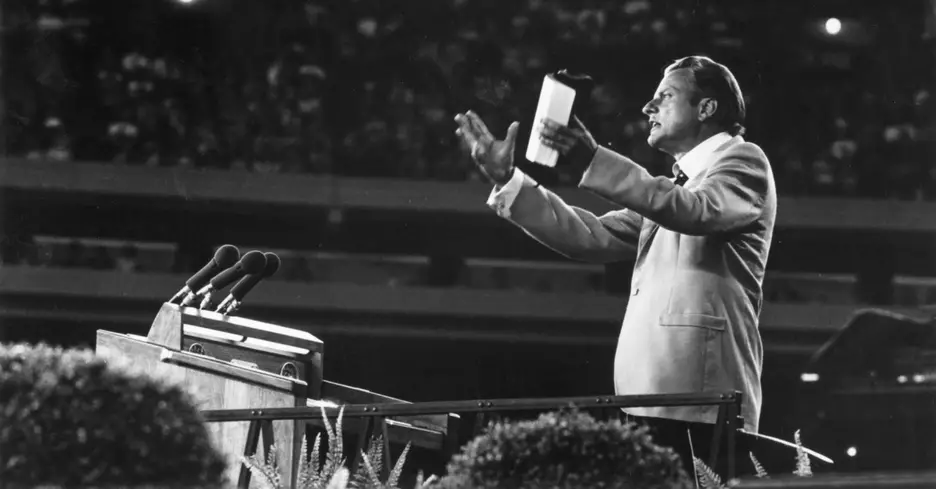
Difficulties mounted. The crusade committee had trouble booking an auditorium. They finally settled on Harringay arena, which speakers had seldom been able to fill two nights in a row. Funds were short. During the crusade, Billy and his coworkers took pay cuts.
At times Billy faltered. “To go to London for a campaign is indeed frightening and humbling. If anything is done for Christ, it will have to be the Lord’s doing.” Bob Jones, Sr. accused Billy of going out of pride.
Billy sailed for England. Aboard ship on this day, February 22, 1954, he was handled a telegram. “A Labor Member of Parliament announced today that he would challenge in Commons the admission of Billy Graham to England on the grounds the American evangelist was interfering in British politics under the guise of religion.” This was referring to the fact that a Crusade brochure had mentioned the woes brought on by Socialism. The Labor Party took it as an attack.
London media demanded Graham’s scalp. Lukewarm supporters backpedaled. Momentarily, Graham felt the crusade was ruined. Yet God had led him this far: he would go on. Meanwhile, he sent an apology. When he disembarked in Britain, he was mobbed by hostile reporters; he said he believed God was going to pour out revival upon England. As he passed through customs, an agent thanked him for coming. So did a cab driver. Billy’s spirits lifted.
Nonetheless, he was all nerves before the first meeting, shaking like a leaf. He spent the day on his knees. A senator called to withdraw his promised attendance. Someone rang to announce that only 2,000 people had showed up to the 11,000-seat arena. Again Billy dropped to his knees.
The negative publicity proved to be a blessing, however. The arena was jammed for three months. Wherever Billy went he was mobbed by friendly crowds. His team had to schedule extra meetings. Over two million people attended. Thousands came to Christ. Londoners sang hymns in the subways. Winston Churchill met Billy and heard the gospel in private. That London crusade did much to establish Mr. Graham’s international ministry, which continued to expand over the next four decades.