1672
In 1650, Master Stephen Bowtell, a London publisher and bookseller, published a book of poems titled THE TENTH MUSE Lately Sprung up in AMERICA, OR Severall Poems… The book is a milestone in English and American literature. For one thing, The Tenth Muse contained the first verses by an American that could stand beside England’s poetry. But The Tenth Muse is important for more than its place of origin. It was the first volume of enduring English language poetry produced by a woman. The author was Anne Bradstreet.
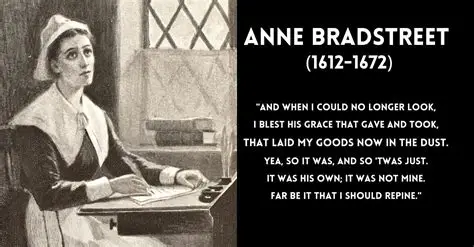
Anne Bradstreet was a Puritan, the daughter of Thomas Dudley, who would serve as a governor of Massachussetts Bay Colony. When just sixteen, she wed Simon Bradstreet, and sailed with him for the New World. Life was hard, not only because the New World was untamed, but because she was often ill, lost her home in a fire, saw a daughter die at four, and was separated from her beloved husband for extended periods when duty took him to England. These experiences, viewed through the lens of faith, found their way into her finest poems.
Written in spite of bouts of illness, blows of personal tragedy, and the tedium of household chores (she reared four sons and four daughters) her poems nonetheless show originality and craftsmanship, their themes often religious, the spelling quaint, the meanings plain:
“Lord, be thou Pilott to the ship,
And send them prosperous gailes;
In storms and sickness, Lord, preserve.
Thy goodness never failes.”
Anne’s God was real and she cried out to him, “My Fathers God, be God of me and mine.” In a short autobiography of her religious experiences she wrote, “Among all my experiences of God’s gracious dealings with me, I have constantly observed this–that he has never suffered me long to sit loose from him, but by one affliction or other has made me look home and search what was amiss.”
Christ was the center of her devotion: “…there is but one Christ, who is the Sun of Righteousness, in the midst of an innumerable company of saints and angels; those saints have their degrees even in this life, some are stars of the first magnitude, and some of lesser degree; and others (and indeed the most in number), but small and obscure, yet all receive their luster (be it more or less) from that glorious sun that enlightens all in all…”
On this day, September 16, 1672, the voice of the Tenth Muse was silenced by consumption. Her son wrote that she “wasted to skin and bone,” was tortured by rheumatism and had a leaking sore that disfigured her arm. Sick and weary, she had looked forward to death. “Now I can wait, looking every day when my Savior shall call for me…O let me ever see you who are invisible, and I shall not be unwilling to come, though by so rough a messenger.”
Anne Bradstreet was no Dante or Milton. Yet her poems, rich in Biblical allusions, rose above mere jingles and ditties. Their images anticipated the Romantic movement of a century later.
1806
HT: Christian History Institute
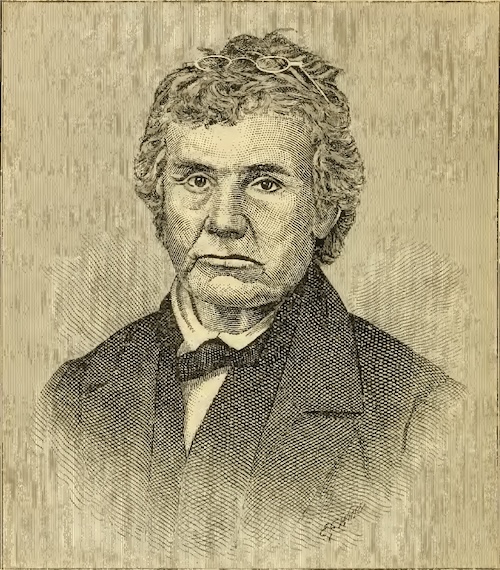
Peter Cartwright was born in September 1785. As a youth in Kentucky, he was rowdy, but a period of deep conviction and a temporary blindness turned him to Christ. He soon began to exhort among the Methodists but did not preach, since he did not feel equipped.
One evening he was commanded by a Methodist leader to preach. He begged to be excused as he had never attempted to do so. Upon the other insisting, he finally consented.
He went out and prayed earnestly that God would help him to speak. Thinking God might be calling him into the ministry, he asked God to give him proof of it by converting a soul that evening.
I went into the house, took my stand, gave out a hymn, sang, and prayed. I then rose and gave them for a text Isaiah 26:4, “Trust ye in the Lord forever: for in the Lord Jehovah is everlasting strength.” The Lord gave light, liberty, and power; the congregation was melted into tears. There was present a professed infidel. The word reached his heart by the Eternal Spirit. He was powerfully convicted, and, as I believe, soundly converted to God that night, and joined the Church, and afterward became a useful member of the same.
Accepting that infidel’s conversion as a divine intervention in answer to his prayer, Cartwright went on to preach, and became one of the most famous frontier circuit riders. Francis Asbury formally ordained him as a deacon on this day, 16 September 1806. He faithfully made his rounds on horseback in all kinds of weather, read to educate himself, spent long hours on his knees, and braved bullies and mockers. He saw God’s power again and again to convert souls and to break down enmities and make all things new.
In one instance, two young men were feuding over a girl. Each swore to kill the other. Armed with pistols and dirks, they came into a camp meeting. People pointed out the pair to Cartwright and acquainted him with the circumstances. That Sunday, supernatural power rested on the congregation. Many fell to the ground. The Holy Spirit convicted both of the feuding men.
Their murderous hearts quailed under the mighty power of God, and with dreadful feelings they made for the altar. One entered on the right, the other on the left. Each was perfectly ignorant of the other being there. I went deliberately to each of them, and took their deadly weapons from their bosoms, and carried them into the preachers’ tent, and then returned and labored faithfully with them and others (for the altar was full) nearly all the afternoon and night. These young men had a sore struggle; but the great deep of their hearts was broken up, and they cried hard for mercy; and while I was kneeling by the side of one of them, just before the break of day, the Lord spoke peace to his wounded soul. He rose in triumph, and gave some thrilling shouts. I hastened to the other young man, at the other side of the altar; and in less than fifteen minutes God powerfully blessed his soul, and he rose and shouted, “Victory!” and as these young men faced about, they saw each other, and, starting simultaneously, met about midway of the altar, and instantly clasped each other in their arms. What a shout went up to heaven from these young men, and almost the whole assembly that were present! There were a great many more who were converted that night.
One of feuding men became a preacher “and spread the holy fire wherever he went,” but died young. Years later, Peter Cartwright still marveled over the change God’s word had accomplished. A few hours before they were sworn enemies, thirsting for each other’s blood; but now all those murderous feelings were removed from them, and, behold! their hearts were filled with love.
1866
HT: Christian History Institute
Charles Hodge accepted an assignment to teach polemic theology (theology that aggressively challenges other theological systems) at Princeton. He wrote to his brother that the new arrangement knocked all his plans on their head and would quadruple his work load. However, he eventually became a leading theologian of the nineteenth century, writing a six volume systematic theology.
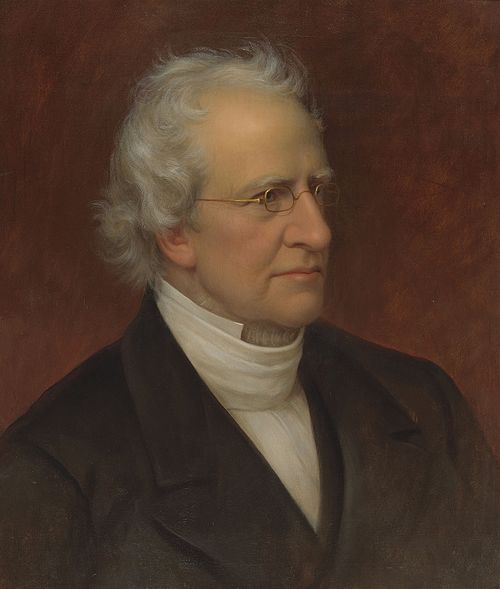
This excerpt is from his sermon notes on 16 September 1866.
“By the word of God is meant, or may be meant . . . . Any revelation of God. A word is a revelation. It is an outward manifestation of thought. Anything, therefore, by which God reveals himself, his purposes, or any fact, is his word. In this sense the whole creation is an outspoken word of God. It reveals him. And all that it makes known of him, of his ways, his character, will or purposes is truth. It accords exactly with what God is, and what it legitimately teaches concerning him may, therefore, be relied upon with implicit confidence.”