1729
“I went to see a man that had one foot in the grave; but I found a man that had one foot in heaven!” So wrote one of John Fletcher‘s visitors after visiting the godly preacher who had become gravely ill by his strenuous efforts for the kingdom of Christ.
Born in Switzerland on this day, September 12, 1729, Fletcher was educated at Nyon. As a young man he intended to enter the army. A series of circumstances foiled his plans. In visiting England in 1752, he fell under the influence of Methodism and determined immediately to become a pastor. Five years later he was ordained. After assisting John Wesley and preaching to French-speaking Swiss expatriates, he threw himself into assisting the vicar of Madeley.
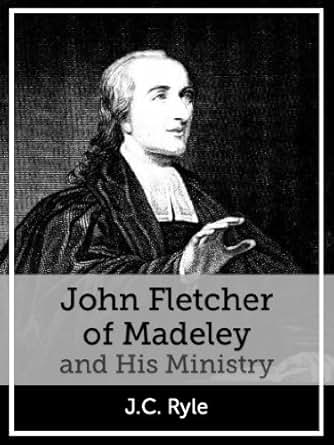
Madeley was a hard town. Fletcher literally chased down sinners to share the gospel with them. No matter what the excuse they gave for not attending church, he tried to rob them of it, even walking through the streets ringing a bell loudly at five in the morning to deny them the pretense that they could not waken themselves on Sunday morning. He was a warm supporter of Sunday schools and set up one at Madeley.
No weather could keep him indoors. Wherever and whenever he was needed, there he was found. To help the poor he gave of himself so greatly that his health broke, a condition aggravated by his constant exposure to the elements.
John Fletcher was strong in his insistence on regeneration. Only with a new birth, a new creation, did one belong to Christ. This is a constant theme of his sermons and writings. In a sketch telling of his conversion, he says he was a religious enthusiast at 18 but did not apprehend Christ from his heart. A nightmare in which he found himself rejected with the damned woke him to a real need for Christ. He saw that all the good works he’d done had been from pride or from fear of Hell, not for love of God. Nonetheless he felt that the fear he went through was an essential part of becoming a Christian.
“The state of the true Christian is a state of peace, joy, love and holiness; but before a man attains it, he must go through a course of fear, anxiety and repentance, whether long or short; for no one was ever cured in soul by the great physician, Jesus Christ, till he felt himself sin sick, and was loaded in his conscience with the burden of his iniquities; especially that of a hard impenitent heart, which he could not himself break and soften.
He wrote prolifically. And although born and reared in Switzerland, John Fletcher adopted the English language so thoroughly that he left fine works in it. He is considered one of the great early Methodist theologians.
1771
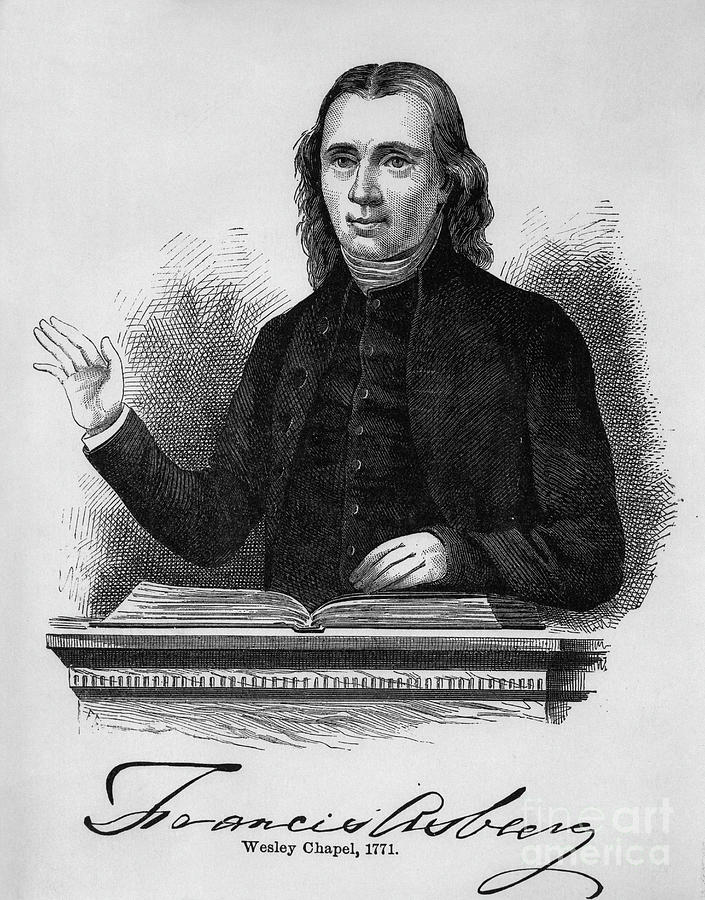
Twenty-six year old Methodist missionary Francis Asbury, writes in his journal as he sails to America: “Whither am I going? To the New World. What to do? To gain honor? No, if I know my own heart. To get money? No, I am going to live to God, and to bring others to do so.”
1865
ALBERT BENJAMIN SIMPSON, better known as A.B. Simpson, was born 15 December 1843 on beautiful Prince Edward Island, Canada. His parents raised him Presbyterian. But Simpson felt that before he could guide others to Christ, he had to know him. He was fifteen when he found peace with his Savior during a revival in 1858. In 1861 he dedicated himself solemnly to God in a covenant: “I feel, O Lord, my own weakness and do not make this in my own strength, else I must fail.”
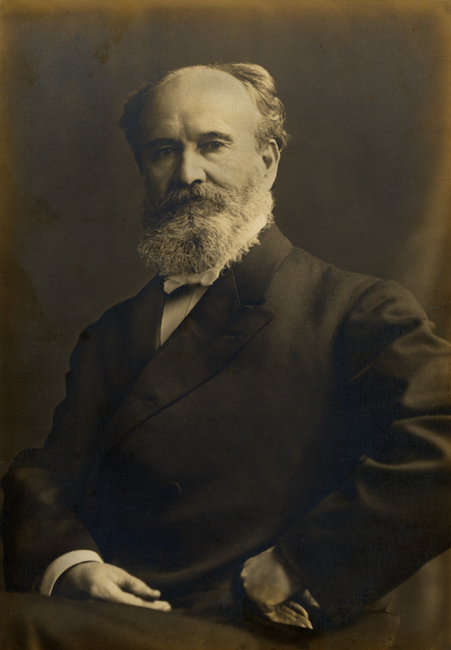
These were not idle words. He determined to enter the ministry. Working to earn the needed funds, he attended Knox College. Following his graduation, two churches offered him positions: one a small country church, the other a large city congregation. After earnest prayer, he accepted the larger, convinced God wanted him to have a wide scope for work. On this day, 12 September 1865, Simpson was ordained in Knox Church at Hamilton, Ontario. The next day he traveled to Toronto to marry his sweetheart, Margaret Henry.
The pair ministered in Ontario for over eight years (1865–1874) and saw seven hundred souls added to the church. However, Simpson’s weak health was aggravated by the Canadian cold, and at the same time, he sensed God wanted more from him. When a large church in Louisville, Kentucky, asked him to become their pastor, he accepted this as God’s leading. The Lord used him in Louisville to bring peace between bitter factions left by the Civil War. Prayer and revival followed, Simpson was healed from his weakness, and his ministry became even more successful.
The Lord next guided Simpson to New York where he began work among immigrants and the city’s poor. Presbyterian church leaders, afraid the church would be overwhelmed by the lower class, refused them membership. Simpson withdrew and formed two organizations: The Christian Alliance to encourage people to live holy lives, and the Evangelical Missionary Alliance to foster Christian missions overseas. Later these merged as The Christian and Missionary Alliance. Simpson edited its mission magazine, said to be the first such magazine to include photographs.
God used Simpson to bring thousands to Christ. His booklet The Fourfold Gospel taught that Christ had four major relationships to humanity: Savior, Sanctifier, Healer, and Coming King. These ideas became key to the theology of the Foursquare churches and Assemblies of God. He wrote about the life of discipleship: “Regeneration is like building a house and having the work done well. Sanctification is having the owner come and dwell in it and fill it with gladness and life and beauty. Many Christians are converted and stop there. They do not go on to the fullness of their life in Christ, and so are in danger of losing what they already possess.”
Simpson died in 1919. His last audible words before slipping into a coma were a prayer for the Christian and Missionary Alliance churches in the United States and abroad.