1785
On this day, September 7, 1785, the Prescott Street Baptist Church of London was humming with activity. Behind the stir was a Baptist deacon named William Fox. Impressed by the Sunday school work of Gloucester’s newspaper editor Robert Raikes which tallied with ideas he had earlier tried to implement, William had called for an association to assist and promote Sunday schools. The bustle meant that his ideas were in process of implementation.
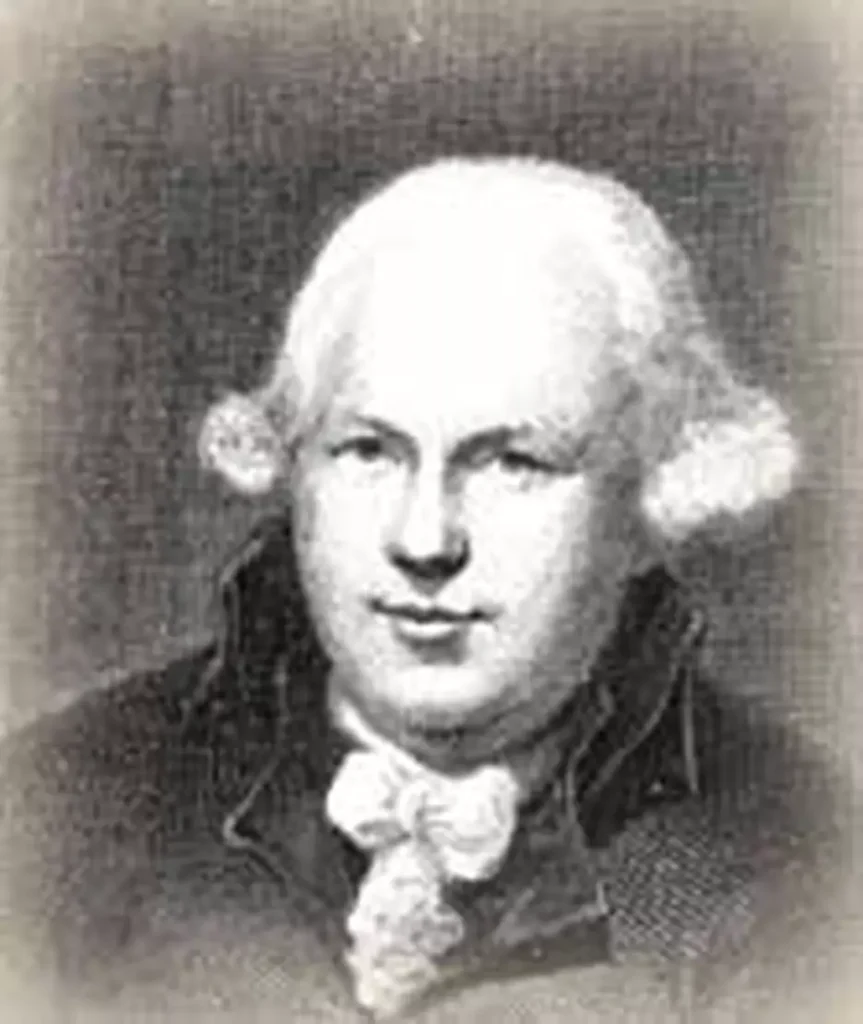
William was an extraordinary individual who developed his first business plan at the age of ten and completely fulfilled it. When he became successful he remained deeply concerned for the poor and did what he could to meet their needs through attempts at legislation, through efforts for their education and his single-handed endeavors to clothe them.
Seeking more leverage, William wrote Raikes about his educational plan. Raikes responded, “I am full of admiration at the great and noble design of the society you speak of forming. If it were possible that my poor abilities could be rendered in any degree useful to you, point out the subject, and you will find me not inactive.”
Raikes was as good as his word; he and other prominent philanthropists gathered to implement William’s idea. The result was the first Sunday School Society for Britain.
It is hard to overemphasize the value of this society. To begin with, it coached the poor each week, educating thousands who otherwise would have had no schooling. The society established rules, provided textbooks and offered funding. Close to 4,000 Sunday schools were formed. This spelled relief for many communities in England.
During the last half of the eighteenth century, many communities dreaded Sunday. It was the one day that factory children had off; not surprisingly they were rowdy on that day. Between 1702 and 1801, the population of England doubled; more and more people were moving to the cities and towns to find work in the factories. The traditional social and religious ties of village life were severed. Often there was no place for the country folk in the town churches, and a generation or two of children grew up without any religious or moral guidelines.
Robert Raikes, owner and printer of the Gloucester Journal, had pondered the fate of the young ruffians. Visiting the prisons, he saw how easy it was for the children to slip into crime. Raikes knew that the parents of these children were so steeped in sin themselves they had no intention of training them to do better. Some other means of teaching these youngsters must be found or many more would end up in prisons.
Raikes hired four women to teach the children to read in schools that would run on Sunday. With the help of Reverend Thomas Stock, he enrolled one hundred children, from six to fourteen years old. The teachers gave the children reading lessons from ten to two, with an hour break for lunch. Then they marched them to church, after which they were taught the catechism until 5:30 P.M. Good behavior was rewarded with small prizes.
William’s innovation was to form Sunday schools under volunteer teachers and to focus on Bible studies rather than secular subjects.
1823
Samuel Marsden, a missionary-pastor in Australia, could not interest the Church Missionary Society of England in sending someone to take the Gospel to the Maori of New Zealand. No one wanted to risk being killed and eaten on the islands. But Samuel believed the job could be done. On a trip to England, he enlisted two laymen, William Hall, a shipbuilder, and John King, a rope maker. Later, they were joined by a third, Thomas Kendall, a schoolmaster.
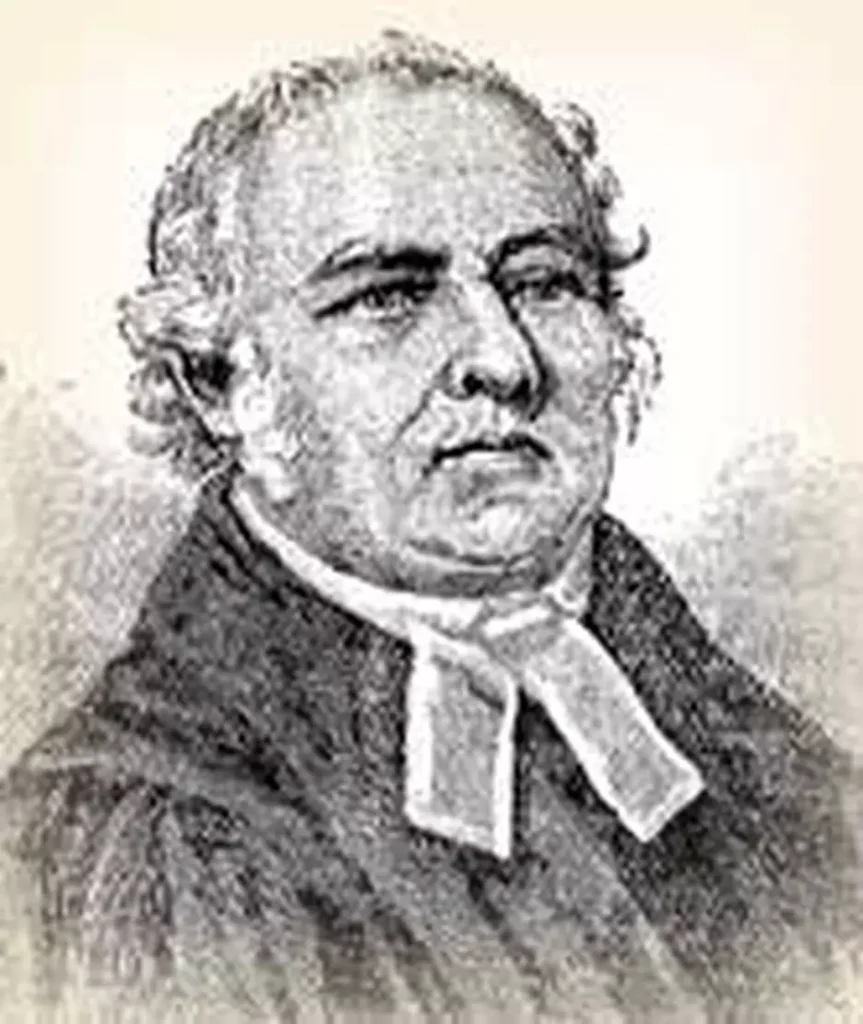
Sailing back to Australia in 1810, the Church of England minister cared for a Maori chief who had been cheated and abused by white sailors. This was Ruatara. When he had returned “Down Under,” Samuel took this man into his own home and paid his passage to New Zealand. The treacherous captain took Samuel’s money but then forced Ruatara to stay on the ship and work for him; but eventually the chief made it home, grateful to Samuel for his assistance and for teaching him to grow wheat.
When Samuel could not get a mission society to act, he and his three friends set out on their own. However, the Maori massacred a boatload of white men and the governor denied Samuel permission to sail to New Zealand. Eventually, Samuel bought a brig, the Active, with his own money and the four men sailed to New Zealand, accompanied by several Maori who had been living in exile. To show that he came in peace, Samuel gave gifts to the tribe that had massacred the ship’s crew. On Christmas day, 1814, he preached the first sermon the Maori had ever heard, its theme being, “Behold, I bring you tidings of great joy.” Ruatara translated.
Through many dangers and adventures, Samuel brought the Gospel to the Maori and it was well received. On this day, September 7, 1823, nine years after his first landing in New Zealand, as Samuel was sailing back to Australia in the Brampton, disaster struck. A strong east wind drove the ship onto a reef. With Samuel was a Wesleyan missionary, who was ill. Samuel had a boat lowered so that he could take this man to safety. Kindly natives shared what they could with the missionaries and cried aloud in dismay when the wind took down the Brampton’s main mast. It appeared as if the men left on the ship must perish. However, after a frightening night, all were rescued.
Altogether, Samuel visited New Zealand seven times. A man of wide vision, he was largely responsible for organizing the evangelization of the South Pacific. However, he was also known as the “flogging parson” in Australia for handing out stiff penalties to convicts. (Parsons often acted as civil magistrates.) A commission which looked into accusations against his conduct did not substantiate the charges against him.
1833
Hannah More was a woman whose remembrance speaks less of her particular accomplishments than of her influence and associations. In this regard, she was like her friend Samuel Johnson. Other friends were William Wilberforce, the Macaulays, and John Newton. The famous actor Garrick patronized her plays which enjoyed success–but Hannah always felt nagging guilt for having written them.
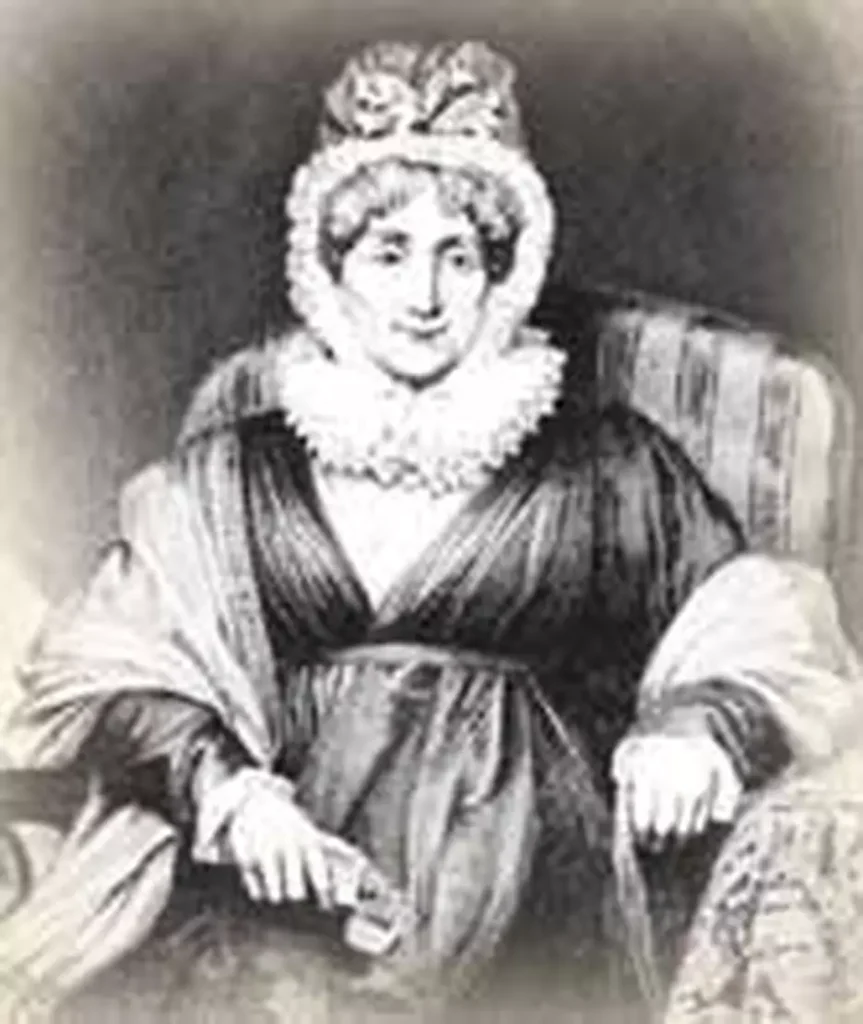
In her early years, Hannah was not adverse to the high life. She kept up a lively correspondence with prominent contemporaries and was part of every festivity. To the end of her days she was on easy terms with “infidels” such as Horace Walpole. But contact with John Newton and William Wilberforce channeled her mind and energies toward moral issues, and she became deeply religious.
In later life Hannah wrote only educational and religious tracts. Education was her forte. As a girl she’d learned the techniques of pedagogy while helping her sisters operate girl’s schools. As an adult, moved by the need for Christian action, she flung her energies into the business of establishing Sunday schools in the brutal coal-mining district of Mendip Hills, where atrocities had turned humans into animals. These schools didn’t teach just Bible lessons as do modern Sunday Schools, but also reading, gardening, cooking, personal hygiene, sewing and civic virtue.
There was terrific opposition to Hannah’s schools from clergy and mine owners. The gentry feared that men who could read the Bible could also read propaganda. They were right–and wrong. The good done by exposing the masses to scripture was immense. Many developed Christ-centered lives.
The miners and their wives desperately needed knowledge to improve their lives; they did not even know how to manage the little money they had. Nor did most of them know how to grow vegetables to supplement their table or how to cook well. Hannah’s homemaking classes addressed such practicalities.
In addition to schooling the lower classes, Hannah fought for justice in such everyday matters as obtaining honest bread weights. She succeeded in getting bread laws passed in 40 parishes.
Toward the end of her life, this lady, whose days had been a whirlwind of activity, became weak and had to limit visits to two days a week. But her vivacity, wit and charity evoked love from the rising generation. The effect of her individual efforts cannot be measured. Many others were working throughout England. Certain is that when she died peacefully on this day, September 7, 1833, she had spent much of her life improving the condition of her fellow men. Most of the £30,000 she left was willed to churches and charities.