
410
HT: Christian History Institute
ON THIS DAY, 24 August 410, Alaric and his Visigoth armies sacked Rome. The fall of the imperial city sent shock waves around the Mediterranean. It seemed the world could never be the same again. The Biblical scholar Jerome summed up the feelings of many when he wrote, “My voice sticks in my throat; and, as I dictate, sobs choke my utterance. The city which had taken the whole world was itself taken…”
Afterward, pagans blamed Christian virtues of humility and non-resistance for the debacle. They also said the fall of Rome proved Christianity false because Christians had died alongside pagans. Furthermore, the supposedly Christian Visigoths had raped Christian and pagan women indiscriminately. Why didn’t God protect the Christians? Another pagan argument was: According to Genesis, God would have spared Sodom if there had been just ten righteous souls in it. Yet Rome was a major church center with thousands of Christians—yet God allowed it to be ravaged.
Stung by such taunts and allegations, Augustine, bishop of Hippo in North Africa, responded by writing his masterpiece, The City of God and the City of Man. Like so much of Augustine’s work this book broke new ground. It was the world’s first teleological history (a history showing that events have purpose and final destiny).
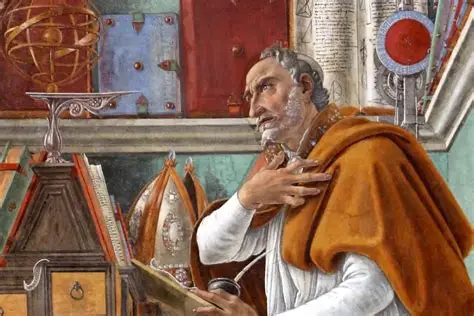
Augustine retorted that the barbarian invaders had spared most of Rome’s churches. Even pagans had found refuge in the Christian places of worship. God had indeed protected people. At any rate, Christians had always suffered and would continue to suffer in this world, he said. Christians had no special immunity from pain or sorrow.
To the charge that Christian non-retaliation was to blame for Rome’s fall, Augustine retorted that the best pagans had held virtue in high esteem. The real cause of imperial weakness, he said, was pagan immorality. “Why were the gods so negligent as to allow the morals of their worshippers to sink to so low a depth?… why did not those gods … lay down moral precepts that would help their devotees to lead a decent life?”
As he saw it, the sack of Rome was but an episode in a great war between God’s kingdom and humanity’s—the rival cities of God and man. It was a war which would last until the end of the world. God’s city consisted of those who love him and his things. That such a city was not as clearly defined now as it should be, he wrote, was because many who claim to be Christians are not. Humanity’s city was the realm of those who hate God and love their appetites.
It took Augustine fourteen years to finish his universal history. But after The City of God, history would never be the same again.
1683
John Owen’s later years were hard. As a young man, he had been majestic in appearance; but long hours of study, the many troubles of his life, and disease wasted him. He died on this day, August 24, 1683 at Ealing (a few miles from London). But his funeral showed how highly he was regarded, for throngs attended, including many notable men.
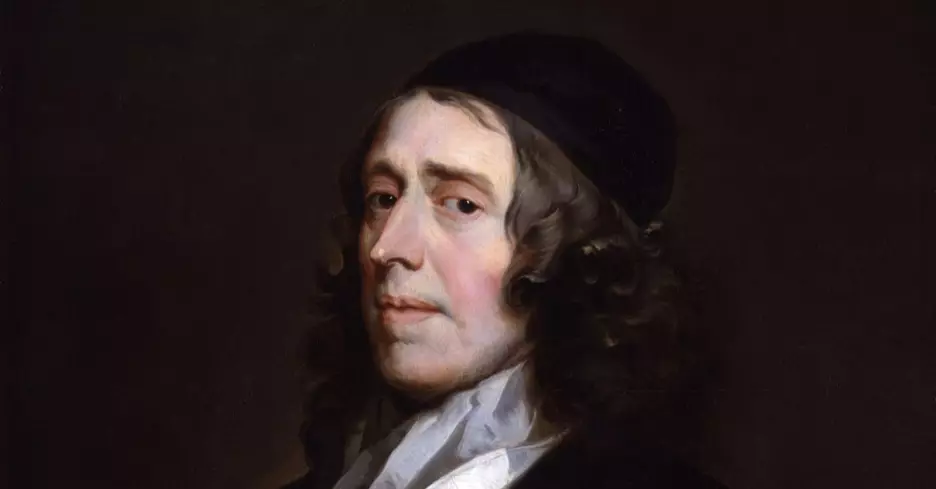
At Oxford University, which he entered in 1628 at twelve years of age, John pored over books so much that he undermined his health by sleeping only four hours a night. In old age he deeply regretted this misuse of his body, and said he would give up all the additional learning it brought him if only he might have his health back. Naturally, he studied the classics of the western world, but also Hebrew, the literature of the Jewish rabbis, mathematics and philosophy. His beliefs at that time were Presbyterian, however, his ambition, although fixed on the church, was worldly.
John was driven from Oxford in 1637 when Archbishop Laud issued rules that many of England’s more democratically-minded or “low” church ministers could not accept. After this, John was in deep depression. He struggled to resolve religious issues to his satisfaction. While in this state, he heard a sermon on the text “Why are you fearful, O you of little faith?” which fired him with new decisiveness.
After that, John wrote a rebuke of Arminianism (a theology which teaches that man has some say in his own salvation or damnation although God is still sovereign). Ordained shortly before his expulsion from Oxford, he was given work at Fordham in Essex. After that he rose steadily in public affairs. Before all was over, he would become one of the top administrators of the university which expelled him and he even sat in Parliament.
He became a Congregationalist (Puritan) and took Parliament’s side in the English Civil Wars. Oliver Cromwell employed him in positions of influence and trust, but John would not go along when Cromwell became “Protector.” In spite of this, many of Parliament’s leaders attended John’s church.
John’s reputation was so great that he was offered many churches. One was in Boston, Massachusetts. John turned that down, but he once scolded the Puritans of New England for persecuting people who disagreed with them.
He also engaged in controversy with such contemporaries as Richard Baxter and Jeremy Taylor. Through it all, John focused his teaching on the person of Christ. “If Christ had not died,” he said, “sin had never died in any sinner unto eternity.” In another place he noted that “Christ did not die for any upon condition, if they do believe; but he died for all God’s elect, that they should believe.”
John wrote many books including a masterpiece on the Holy Spirit. Kidney stones and asthma tormented him in his last years. But he died peacefully in the end, eyes and hands lifted up as if in prayer.