
1572
John Knox, Scottish Reformer, preaches his final sermon at St. Giles’ Cathedral in Edinburgh, fifteen days before his death. He is helped into the pulpit to deliver a message on Christ’s temptation in the wilderness (Matthew 4:1–11), urging his hearers to resist the devil and remain steadfast in faith.
1865
IN ITS OBITUARY of him, the Missionary Herald asserted that Henry Ballantine preferred above all else to speak of the love of God as manifested in Christ. Once after he had preached from the text, “The blood of Jesus Christ, his son, cleanses us from all sin,” a man of eighty approached, leaning on a staff, and asked, “Is that true? Does it cleanse from all sin?”
“Yes, from all sin,” replied Ballantine, who spoke the local Indian language well.
“But suppose one has killed several men, as I did when I was a gang-robber?”
“The blood of Christ can cleanse even such as you,” replied the missionary, and the old murderer soon became a Christian.
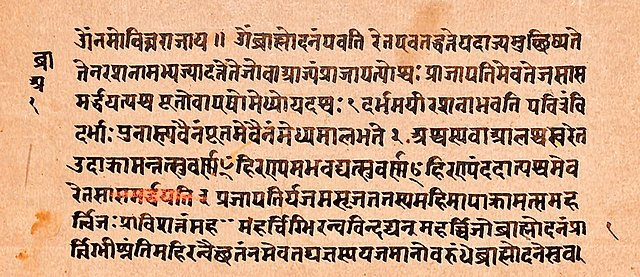
Sanskrit text written in the Devanagari script which is also used by the Marathi language. Ms Sarah Welch / [CC-BY-SA 4.0] Wikimedia File:13th-century Shatapatha Brahmana 14th Khanda Prapathaka 3-4, page 1 front, Sanskrit, Devanagari script.jpg
Left an orphan in 1822 at ten years of age, Ballantine pressed hard to achieve the best education he could and became at teacher while still in his teens. He also became a convert to Christianity and immediately determined to serve the Lord. Thus it happened that in 1835 he and his young bride sailed for India.
Appointed to Ahmednuggur, he quickly mastered the Marathi language. Among his many labors was to correct the Bible translation in that tongue. He also translated hymns into his adopted language and compiled two hymnals, one for adults, the other for children. He produced other literature in the Marathi language, championed education, and trained local pastors so that the Indian churches could function independently of westerners.
But he considered preaching to be his foremost task and addressed formal church settings on Sundays and spread the gospel message in the streets and at rest homes on weekdays. So great was his desire to disseminate the hope of Christ that, any time he could, he joined tours to preach in surrounding villages.
However, his health was poor and India’s climate aggravated his weakness. In the early 1850s he found it necessary to recuperate in the cooler temperatures of the United States for two and a half years.
That lengthy rest enabled him to function for twelve years more in India. At the end, his health became so precarious doctors urged him to sail for home in 1865. Unwilling to quit the work, he tried several times to rally, but could not regain his strength. “The Lord does not count me worthy to labor any longer for him in my beloved field,” he lamented.
Sailing home, he consulted a doctor in Cairo, Egypt, who ratified the counsel of his India doctors. However, the declining missionary never reached home. Ballantine died at sea on this day 9 November 1865 as his ship neared Portugal. Among his last words were, “How sweet it is to leave all with Jesus. In Him is all my trust. He will not forsake me.”
1865
“Give me Souls, O God, or I die!” That became the plea of John Hyde, born on this day, November 9, 1865 in Carrollton, Illinois. John’s family were praying people. Consequently, as a young man, he learned to pray expecting results.
John’s brother Edmund went as a student missionary to Montana, where he contracted a fever and died. John wondered if he should take Edmund’s place. During his senior year at McCormick Theological Seminary, he came to the room of his friend Mr. Konkle near midnight, saying he wanted all Konkle’s arguments in favor of going to the foreign mission field. “I told him that he knew as much about the foreign field as I did; that I didn’t believe it was argument that he needed, and that I thought the way for him to settle it was to lay it before our Father and stay until He decided for him: We sat in silence a while longer, and, saying he believed I was right, he rose and bade me good night.”
The next morning Konkle felt a hand on his arm. Looking around, he saw John’s face radiant with a new vision. “It’s settled, Konkle,” said he.
John left for India. Aboard ship, he opened a letter from a friend who wrote that he would pray until John was filled with the Holy Spirit. Angrily John crumpled the letter and hurled it aside. He had yielded his heart to the Lord, gotten his degree, studied Indian languages and was obediently on his way to a life work. How dare his friend suggest he lacked the Spirit? But when he cooled down, he realized that his friend was right. He pleaded for the power of the Holy Spirit.
The result was that John became a notable intercessor, one who pleads for the souls and needs of others. He was nicknamed “Praying Hyde.” He often paid for his concern with sleepless nights.
Revival began when he came late to a meeting one evening. “I have been having a great controversy with God. I feel that he has wanted me to come here and testify to you concerning some things that he has done for me, and I have been arguing with him that I should not do this. Only this evening…have I got peace concerning the matter and have I agreed to obey him, and now I have come to tell you just some things that he has done for me.” John told them how God had freed him from certain sins. Soon his listeners were weeping and confessing their own.
In 1908, anguished by the sight of sin and souls doomed to hell, he asked the Lord to bring a soul a day into the kingdom of God. Soon he upped that to two souls, and then four. God answered his prayers.
But in March of 1911, Hyde had to say good-bye to India. His heart had shifted in his chest and required medical attention. In the United States it was found he had a malignant brain tumor. Surgery was necessary. On February 17, 1912 he died. His last words were “Shout the victory of Jesus Christ!”
1895
AMY CARMICHAEL was sick when she landed in India on this day, 9 November 1895. Friends had urged her to stay in England because of her neuralgia, a nerve disease that made her feeble and achy for weeks at a time. Had she listened to them, she would probably be unknown today. Instead, Carmichael rescued children from temple prostitution in India and wrote renowned books on her work.
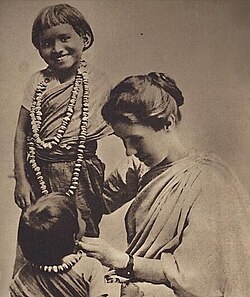
When she was a child, her mother told her that if she prayed, the Lord would answer. One night Carmichael prayed for blue eyes instead of brown. In the morning she jumped out of bed and ran to the mirror where she wailed in disappointment to see her eyes still brown. Her mother had to explain that “no” is an answer, too. God meant her to have brown eyes for a reason, she said.
Although the teenaged Carmichael thought she was a Christian, she discovered she needed a personal commitment to Christ. Once she made it, service to Him became the passion of her life. She started classes and prayer groups for Belfast ragamuffins. She worked with the “shawlies,” or factory girls so poor that they could not afford hats to wear to church but wore shawls instead. Respectable people shunned them. Carmichael soon had to find space in her classes and prayer groups for three hundred.
After her father, Mr. Carmichael died, his wife and children moved to England. An uncle asked Carmichael to teach his mill workers about Jesus. Living near the mill in a bug-infested apartment, she threw herself into the effort. However, she was constantly sick and realized she must quit. She became a missionary to Japan, but the cold troubled her so much that she had to return to England.
Although it was hard for her, Carmichael left her aging mother once again and obeyed God’s call to go to India. There she discovered that little children were being rented as prostitutes in Hindu temples and wrote a book, Things as they Are, telling as much as was then printable about the destructive practices. She started a rescue work for these children. Dressed in a sari, her skin stained brown, she could pass as a Hindu. Now she understood why God had given her brown eyes!
Strictly speaking, Carmichael’s work was illegal. When she rescued a five-year-old named Kohila, the child’s guardians demanded her back. Indian prosecutors charged Carmichael with kidnapping and she faced seven years in prison. However, perhaps fearing world opinion, India dropped the charges. “It is by what he conquers that Christ’s power is to be discovered,” she had written.