
1735
John and Charles Wesley set sail for Georgia aboard the Simmonds, intent on saving their souls and living wholly to the glory of God.
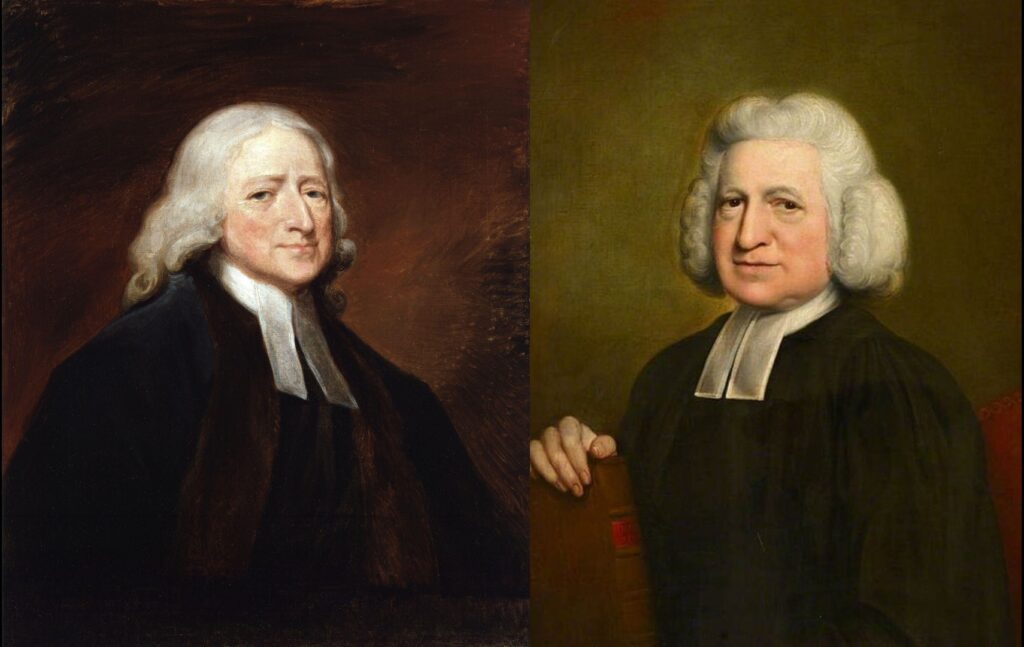
Though zealous in purpose, John would later admit that the voyage revealed his own spiritual emptiness, a realization that prepared the way for his transformative conversion three years later.
1829
BORN IN PERTHSHIRE, Scotland, in 1806, Alexander Duff grew up on a farm where his father taught him love of Christ and horror of idolatry. He later wrote, “If ever son had reason to thank God for the prayers, the instruction, the counsels, and the consistent example of a devoutly pious father, I am that son.” His equally godly mother ran the family dairy.
A dream about Judgment Day showed Duff his need of a Savior and a close call with drowning taught him the nearness of eternity. He learned the value of perseverance when he and a friend almost lost their lives during a heavy snowfall but did not despair although lost in the dark.
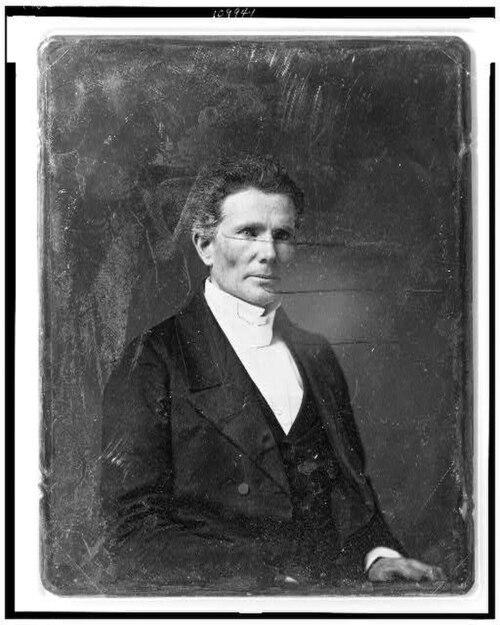
While Duff studied at the University of St. Andrews, the Church of Scotland formed a mission society and asked him to be their first missionary. He was twenty-three when he accepted the call. Three months before leaving for India, Duff and Anne Scott Drysdale married. On this day, 14 October 1829, the newlyweds sailed aboard the Lady Holland. Following a narrow escape from pirates, their ship went down near South Africa with everything they owned. Undaunted, they boarded another ship for India, having salvaged a Bible and a psalm book. Eight months later, after a second shipwreck, they arrived at Calcutta.
Duff planned to educate Indians by combining secular subjects with religious training. Other missionaries told him this would not succeed: high caste Hindus would never allow their sons to study from the Bible. Encouraged by the experienced missionary, William Carey, and an Indian scholar, Duff stuck with his plan and opened a school under a Banyan tree. Within two years, he had over a thousand students. He said, “Our maxim has been, is now, and ever will be this: wherever, whenever, and by whomsoever Christianity is sacrificed on the altar of worldly expediency, there and then must the supreme good of mankind lie bleeding at its base.”
Because India has many languages, Duff put his pupils on an equal footing by teaching in English. He also thought that England’s rule would be easier if more Indians knew their rulers’ language. Meanwhile, he labored to master Bengali so he could interact better with the majority of his pupils.
Duff died in 1878. Although his methods were widely imitated in India, he saw few conversions, mostly from the lower classes. However, his classes inspired reform of Hinduism and produced men able to staff India’s civil service. His arguments helped bring about the establishment of Calcutta’s first public hospital and break the hold of traditions that made it taboo for respectable Hindus to study anatomy.
1876
Harry Ironside was laid aside for dead when he was born on this day, October 14, 1876 in Toronto, Canada. His mother was in a bad state and needed of all the attention she could get if she were to pull through. But God had big plans for the “dead” baby. A nurse detected a feeble pulse in him. She popped him into a bath of hot water and he quickly exercised the vocal cords which would declare Christ to perhaps a million listeners over the course of his life.
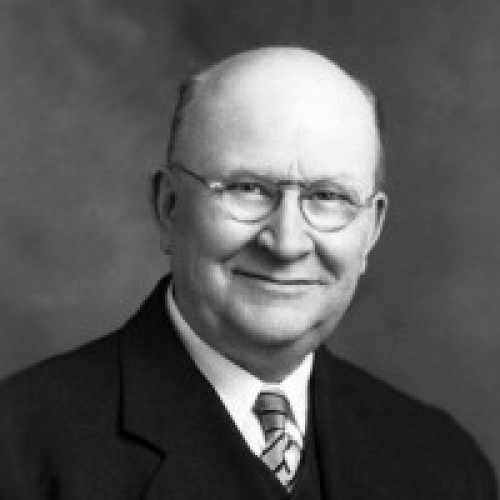
By the time he was four, he had memorized his first scripture verse. That did not set his mind at rest with God. He became a great student of the Bible, reading it through fourteen times by the time he was fourteen years old. That brought him no peace. Terrified of eternal death, he held tent meetings and services for children but, when asked if he was born again, could only stammer. But at fourteen years of age, he asked the Lord for salvation. To his surprise, he experienced no feeling, no emotion. Nonetheless, he trusted God for forgiveness of his sins and rose from his knees determined not to call God a liar by doubting him.
Now he began to preach in earnest. At that time he was associated with the Salvation Army. For five years he preached almost nonstop. He sought the experience called “sanctification” and thought he had attained it. This brought him little peace and less purity. He finally learned to look for holiness not within himself, but outside, in Christ Jesus. Leaving the Salvation Army, he became associated with the Plymouth Brethren.
Despite only an eighth grade education, Harry Ironside became one of the world’s best-known and best-beloved Bible teachers, traveling the globe to give messages. Never ordained, he nonetheless pastored Moody Memorial Church in Chicago for eighteen years.
In writing his autobiography he would say, “…As I look back over all the way the Lord has led me, I can but praise Him for the matchless grace that gave me to see that perfect holiness and perfect love were to be found, not in me, but in Christ Jesus alone.” He was on a preaching tour in New Zealand in 1951 when he died following a heart attack. At birth he seemed dead. At death he became alive, for we know he entered eternal life.
1932
Gladys Aylward departs from Liverpool for China, determined to pursue her calling despite being told by mission boards she is unfit for the task.
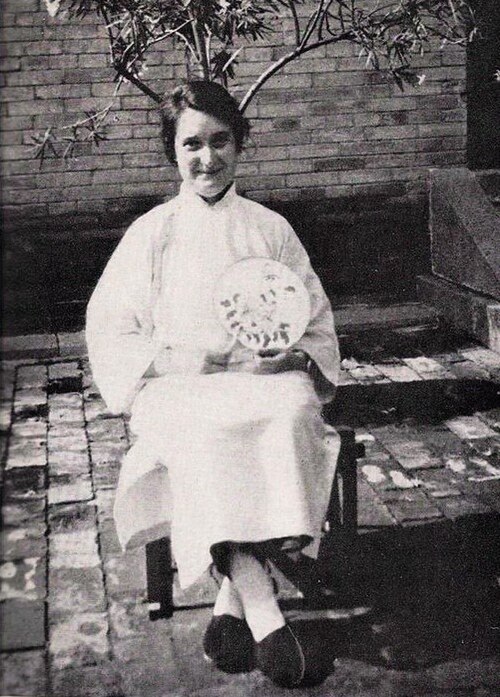
Her heroic adventures and rescue of over one hundred orphans will inspire the film Inn of the Sixth Happiness.